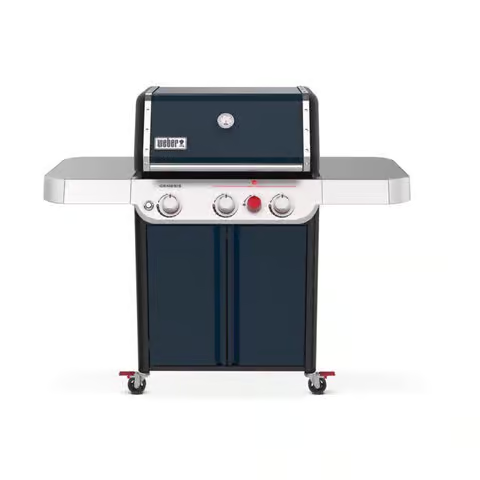
The Final Click: Why My 15-Year-Old Brinkmann Had to Go
There is a certain sentimental attachment you develop to an appliance that has stuck by you for a decade and a half. For me, it was my Brinkmann grill from Home Depot. It wasn’t fancy, but it was there for countless weekend burgers and Fourth of July parties.
But recently, the relationship turned toxic.
It wasn’t just that it was old; it was that it actively stopped working. The “sure-fire” ignition became a game of chance, eventually turning into a game of “click-click-click… silence.” I was tired of manually lighting it with a long match like I was lighting a 19th-century lantern just to cook a hot dog.
Worse yet was the realization about materials. When I bought it 15 years ago, I saw “stainless steel” on the box and thought I was set for life. I learned the hard way that there is high-quality stainless steel, and then there is whatever “cheap stainless” my Brinkmann was actually made of. It wasn’t just dirty; it was rusting through in ways metal shouldn’t if it truly is “stainless.”
Finding replacement parts for a defunct brand (Brinkmann went bankrupt in 2015) to fix a rusting hulk that wouldn’t even start felt like throwing good money after bad. It was time to upgrade.
The Research Rabbit Hole
Diving into the modern grill market after 15 years was a shock. I knew I wanted something that wouldn’t just look nice for a year and then start corroding. My research quickly narrowed down to the gold standard: Weber.
Here is the breakdown of my research journey, fueled by my desire to never hear that futile “click-click-click” again:
1. The Material Reality Check
Coming from my rusting “stainless” experience, I paid close attention to materials. I learned that Weber’s porcelain-enameled hoods (the classic black ones) often outlast cheap stainless steel competitors because the coating is baked on and virtually rust-proof. If I was going to go stainless again, it had to be the real deal this time.
2. The Ignition Factor
I read extensively about Weber’s “GS4” grilling system. The biggest selling point for me? The “Infinity Ignition.” They actually guarantee the thing will light every time. After months of wrestling with my Brinkmann’s failed starter, this sounded like a luxury feature.
3. The Contenders
- Weber Spirit II E-310: The logical, responsible choice. It has the good ignition system, solid materials, and fits the same space my old grill did.
- Weber Genesis: The temptress. Bigger, heavier, and built like a tank. The lids feel substantial, not tinny like my old grill had become.
The Decision
I hauled the old Brinkmann to the curb last weekend. Seeing the rust spots in the daylight really confirmed my decision—it had served its time.
I’m looking forward to a summer where I don’t need a backup plan just to get the grill lit, and where I don’t have to worry that my “stainless” steel is slowly disintegrating while I cook.
Time to fire up the new one. (On the first click).